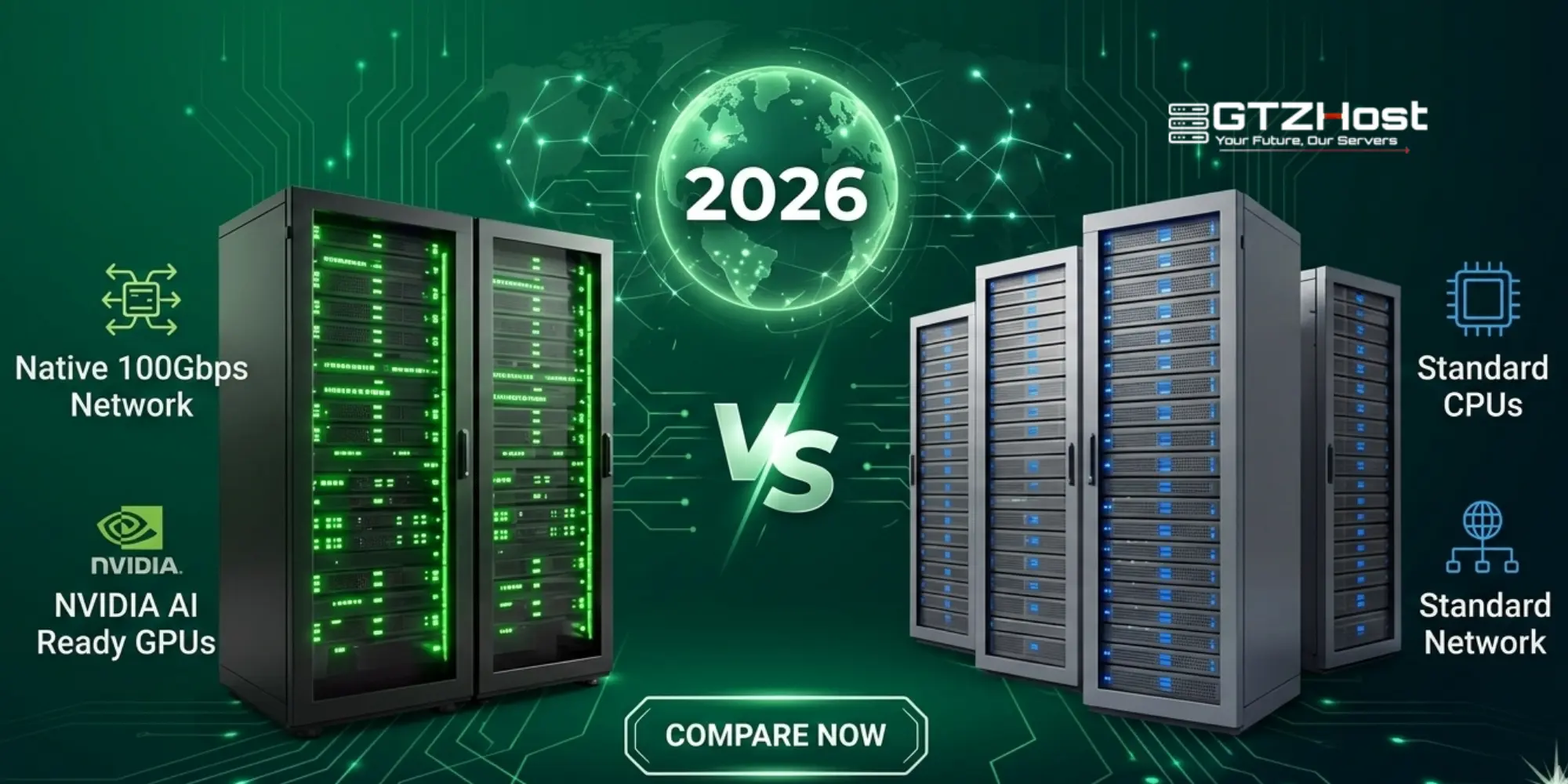
That's the quiet reason so many AI startups, research teams, and enterprise ML groups eventually move off shared cloud GPU instances and onto a US-based GPU dedicated server. It's rarely about chasing a spec sheet. It's about removing the infrastructure bottlenecks that only show up once a model leaves the prototype stage.
Why the US Region Specifically
If your training data, your dev team, or your end users sit anywhere near North America, the physics of networking work in your favor here. A model fine-tuning job that moves terabytes of data between storage and GPU wants a short, uncontended path — not a route that crosses an ocean twice. And for anything customer-facing (a chat assistant, a fraud-detection API, a recommendation engine), every extra hop between your inference server and your user shows up as a delay someone can feel.
Three things tend to matter most once an AI workload becomes a production system rather than a notebook experiment:
Latency to your actual audience. North American traffic routed through a distant region adds round-trip time that compounds across a multi-step LLM pipeline — this is the difference between a chat response that feels instant and one that feels sluggish.
Sustained data throughput. Training jobs move enormous volumes of data repeatedly. A dedicated server on a carrier-neutral US network avoids the throttling that shared cloud tiers apply once you cross a usage threshold.
Data residency expectations. Healthcare, fintech, and enterprise AI projects frequently need to show exactly where data is processed. A US-based dedicated server gives a clean, auditable answer to that question.
NVIDIA GPU Options That Actually Fit AI Workloads
Not every AI project needs the same GPU, and this is where teams commonly overspend — or underspec and hit a wall six months later. Here's how the practical options break down:
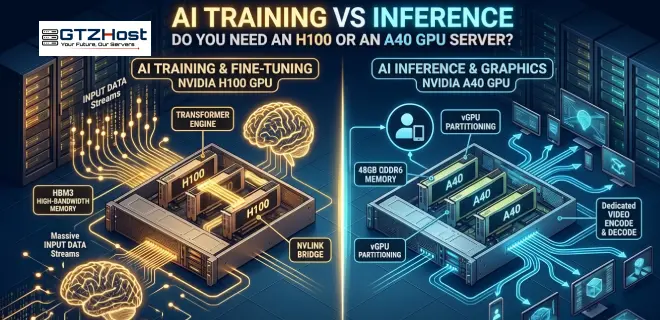
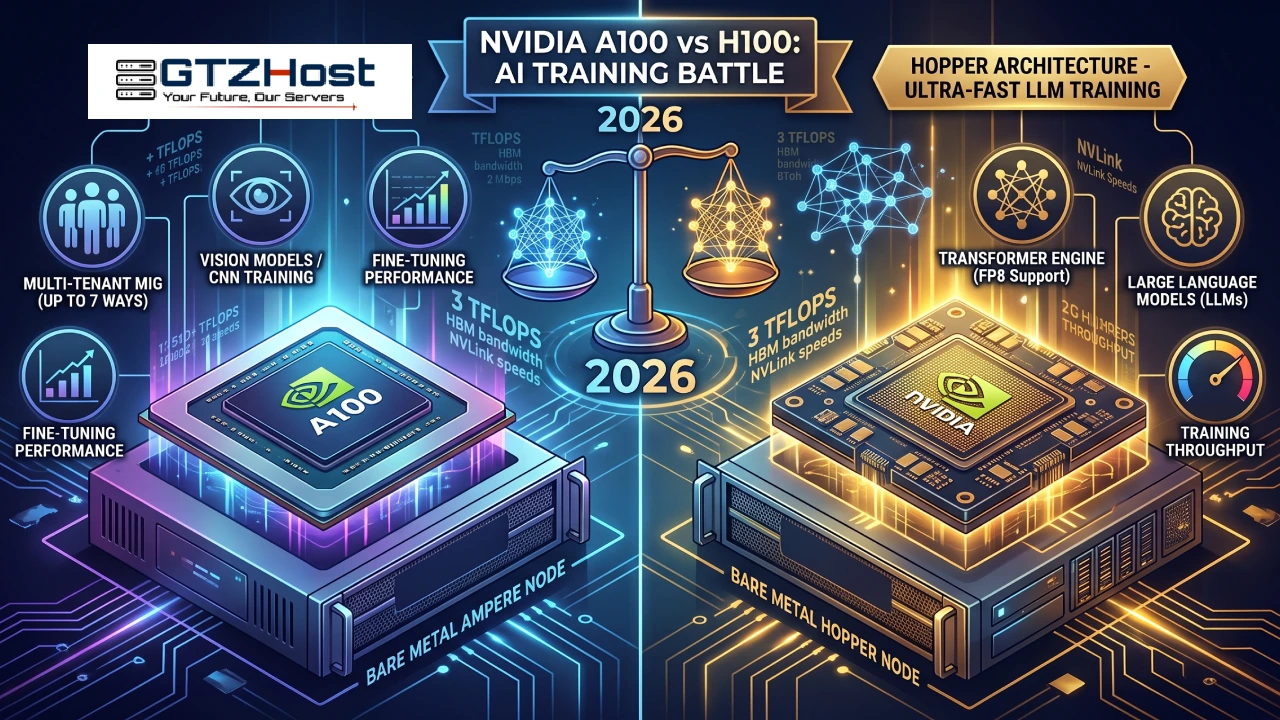
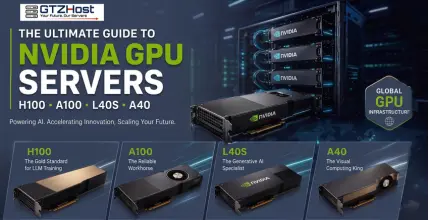
NVIDIA A100 — the default for serious training and inference. Built around Tensor Core acceleration and strong mixed-precision performance, the A100 is the realistic starting point for LLM fine-tuning, deep learning research, and high-performance computing. If your workload involves transformer-based models, vector search at scale, or anything CUDA-optimized, this is where most production deployments land.
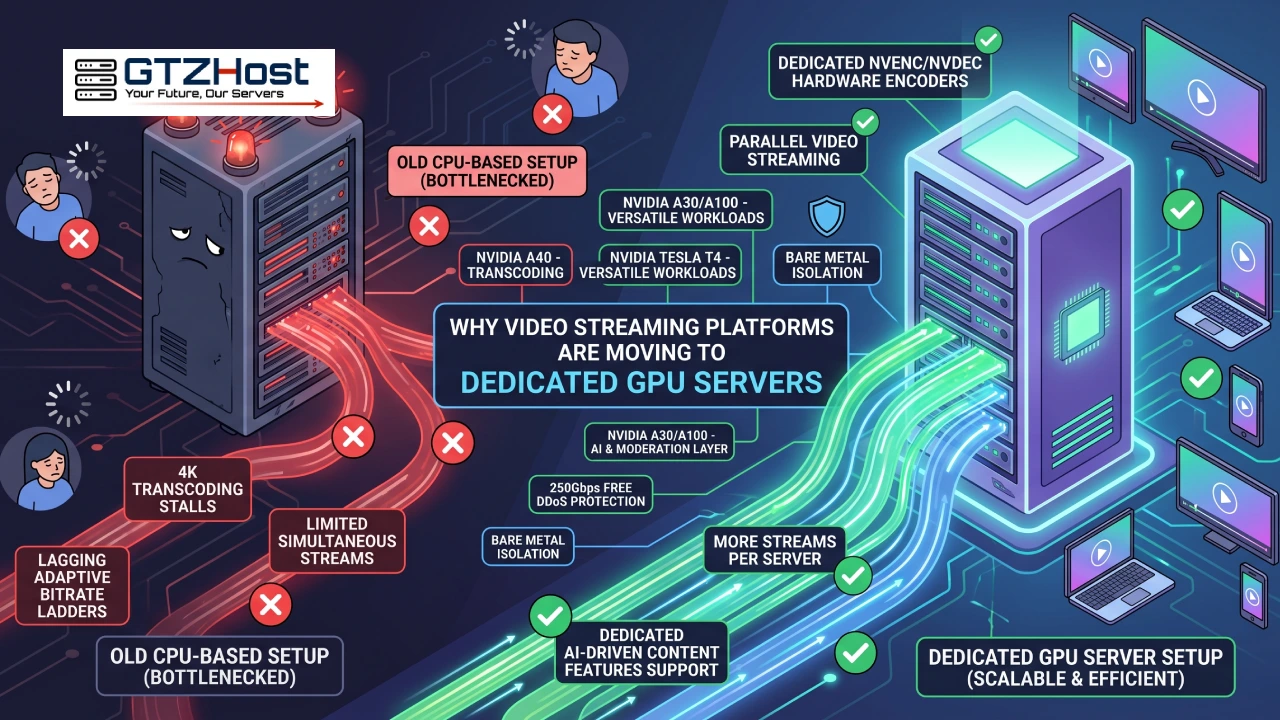
NVIDIA A40 — the workhorse for mixed rendering and AI pipelines. Useful when your workload isn't purely training-focused — generative visual pipelines, video processing tied to a model, or VDI environments that also need to run inference on the side.
NVIDIA Tesla T4 — the cost-efficient entry point. For lighter inference jobs, batch scoring, or workloads that don't run GPUs at full utilization around the clock, the T4 keeps costs down without giving up reliability. Many teams start here and graduate to A100-class hardware once traffic or model size grows.
A note on next-generation hardware: interest in H100-class GPUs has grown fast across the industry, and demand regularly outpaces available allocation everywhere, not just at one provider. If your project needs that tier of compute, it's worth confirming current availability directly before locking an architecture decision to a specific chip — allocation shifts month to month, and building your plan around whichever high-memory GPU class is actually available tends to get a project into production faster than waiting on one specific card.
What "AI-Ready" Actually Means Beyond the GPU Spec Sheet
A powerful GPU sitting behind mediocre supporting infrastructure still bottlenecks. The pieces that matter together are:
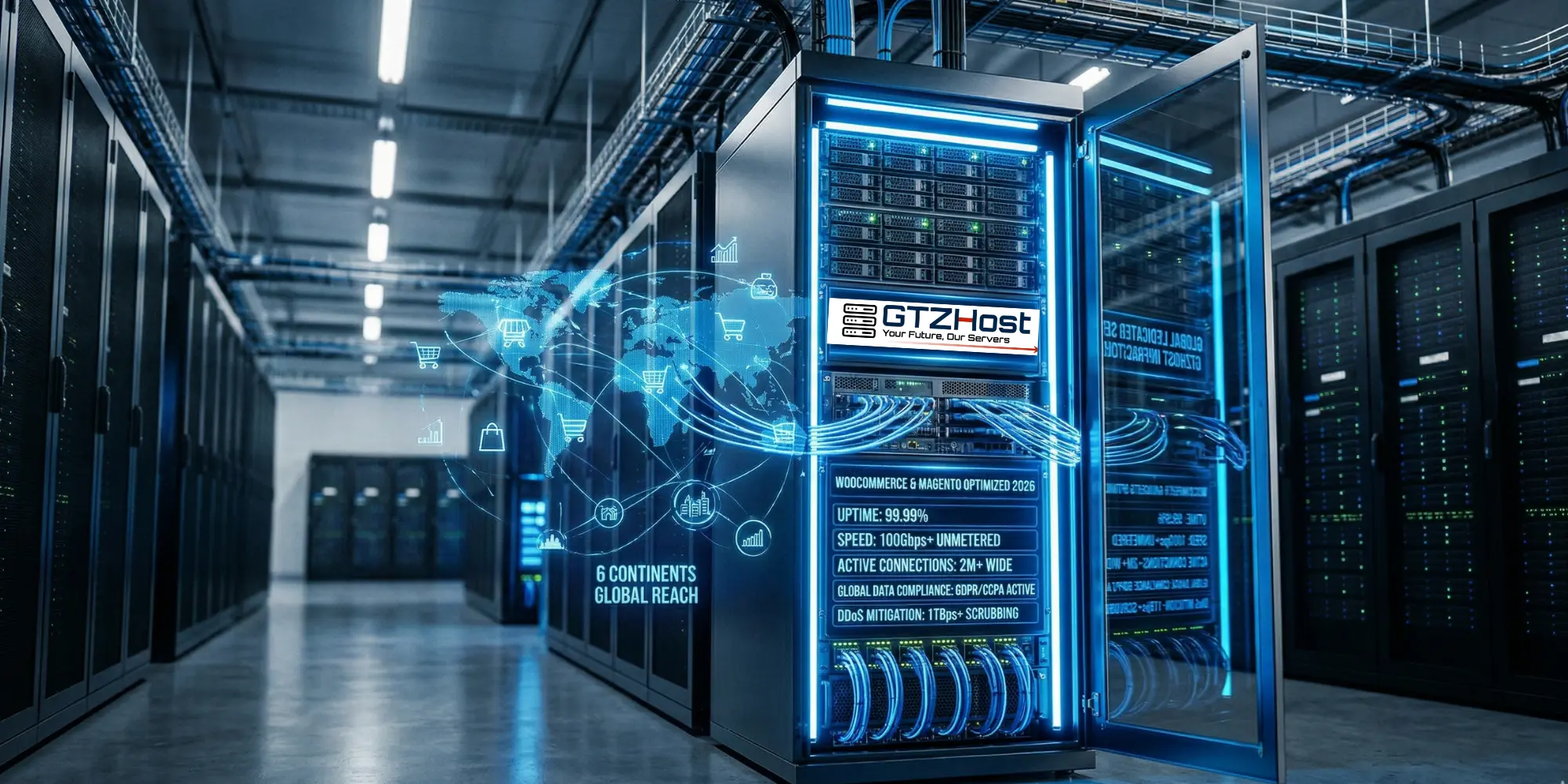
Exclusive, uncontended compute is the first requirement — dedicated hardware means no virtualization overhead stealing GPU cycles mid-run, which matters enormously for a training job that takes 30+ hours and can't afford to restart. Second, the network has to keep pace: redundant, carrier-neutral uplinks stop data pipelines from stalling on I/O while the GPU sits idle waiting for the next batch. Third, the facility itself needs to be built for uptime — Tier-III standards with structured redundancy and 24/7 monitoring mean a facility-level fault doesn't take a multi-day training run down with it. And finally, configuration flexibility matters: AI workloads vary enormously in their storage-to-compute ratio, so a server that can be shaped around your actual pipeline avoids paying for capacity you'll never use.
Intel Xeon vs. AMD EPYC: The Host CPU Still Matters
The GPU handles the heavy lifting, but data preprocessing, orchestration, and any CPU-bound pipeline steps still run on the host processor.
| CPU Platform | Strongest fit |
|---|---|
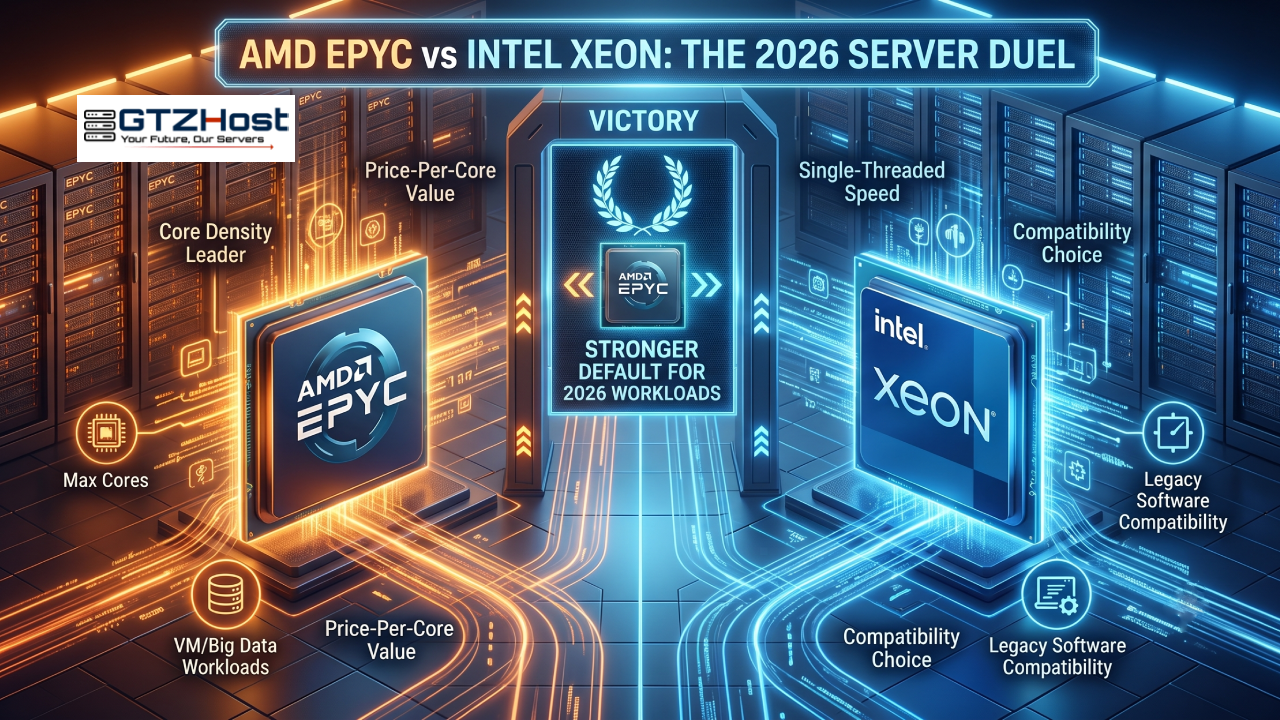
| Intel Xeon | Mixed AI/enterprise workloads, proven data-center reliability, broad software compatibility |
| AMD EPYC | Heavy parallel preprocessing before data reaches the GPU, high core-count workloads |
Neither is a universal "better" choice — if your bottleneck is GPU-bound training, this decision matters less; if your pipeline spends real time preparing data before it ever touches the GPU, EPYC's core density often pays off.
A Deployment Checklist Worth Running Through First
[ ] Map your model size and batch requirements against A100-class memory bandwidth
[ ] Confirm whether your server chassis needs double-width GPU support
[ ] Check the network path from your primary user base to the target US region
[ ] Match storage throughput to your dataset's actual I/O pattern
[ ] Decide now whether you need multi-GPU scaling, or just headroom for it later
Dedicated GPU Servers vs. Cloud GPU Instances
| Feature | Cloud GPU Instances | Dedicated GPU Servers |
|---|---|---|
| Pricing | Hourly, variable | Predictable monthly cost |
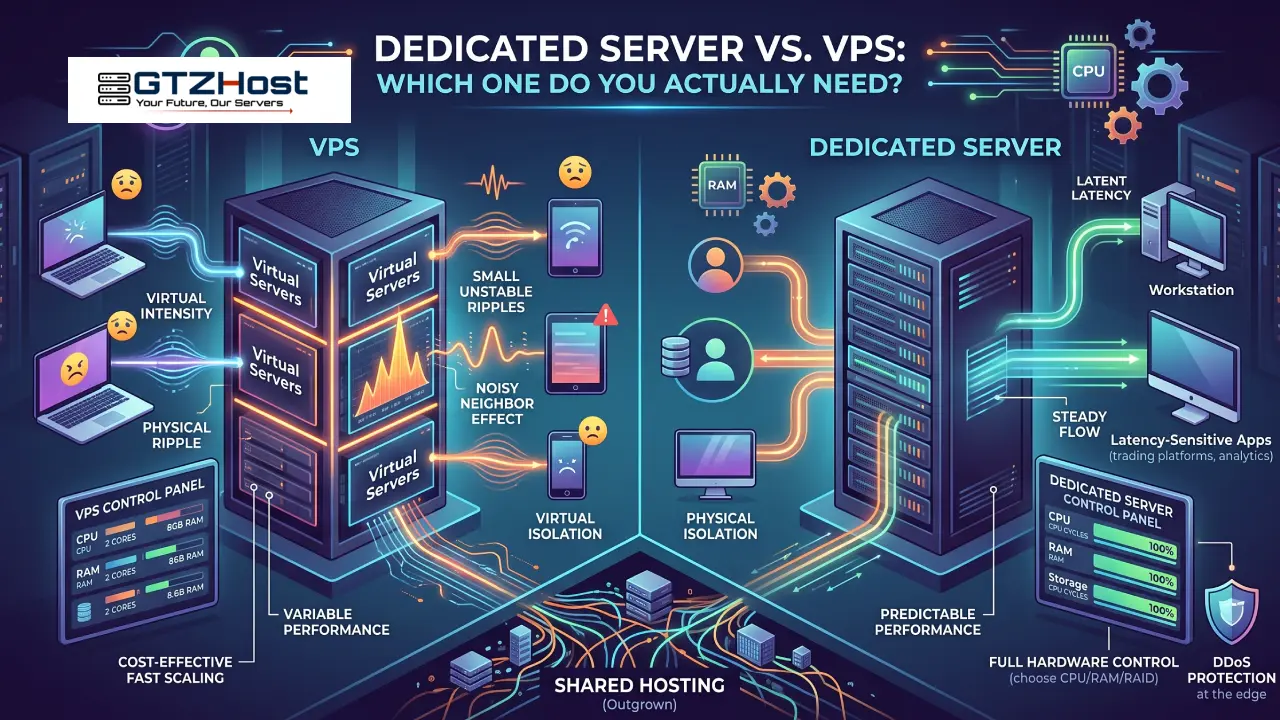
| Hardware access | Shared, virtualized | Exclusive |
| Performance consistency | Can vary under contention | Stable |
| Customization | Limited to instance types | Configurable CPU/RAM/storage |
| Best for | Short experiments, bursty testing | Sustained training, production inference |
Cloud instances still make sense for a two-week experiment or a one-off fine-tuning run. Once a workload becomes something you run every week for the next year, the economics — and the performance consistency — tend to favor dedicated hardware.
Ready to deploy your AI workload on a US-based NVIDIA GPU dedicated server? Explore GTZHost's GPU server options across major US data center hubs, or talk to the team about the right configuration for your model.
View GTZ Host Dedicated Server PlansFrequently Asked Questions (FAQ)
Is a US-based GPU server better than a cloud AI instance for training models?
For sustained, predictable training workloads, a dedicated GPU server usually offers better price-to-performance since you're not paying a variable hourly premium. Cloud instances remain a reasonable fit for short, bursty experimentation.
Which NVIDIA GPU should I start with for LLM fine-tuning?
A100-class GPUs are the practical starting point for fine-tuning mid-sized transformer models. Lighter, inference-only workloads can often run comfortably on a Tesla T4.
Does a US server location actually reduce AI inference latency?
Yes, if your user base is North American. Routing inference requests through a nearby US data center on a low-latency, carrier-neutral network measurably cuts round-trip time compared with a distant region.
Can I customize storage and RAM alongside the GPU on a dedicated server?
Yes — this is one of the core advantages over a fixed cloud instance type. CPU, RAM, and storage can all be configured around your specific AI pipeline's demands.
Are H100 GPUs available for dedicated hosting?
Availability for the newest NVIDIA GPU generations shifts constantly across the industry due to demand. It's worth confirming current allocation before finalizing an architecture plan around a specific chip.